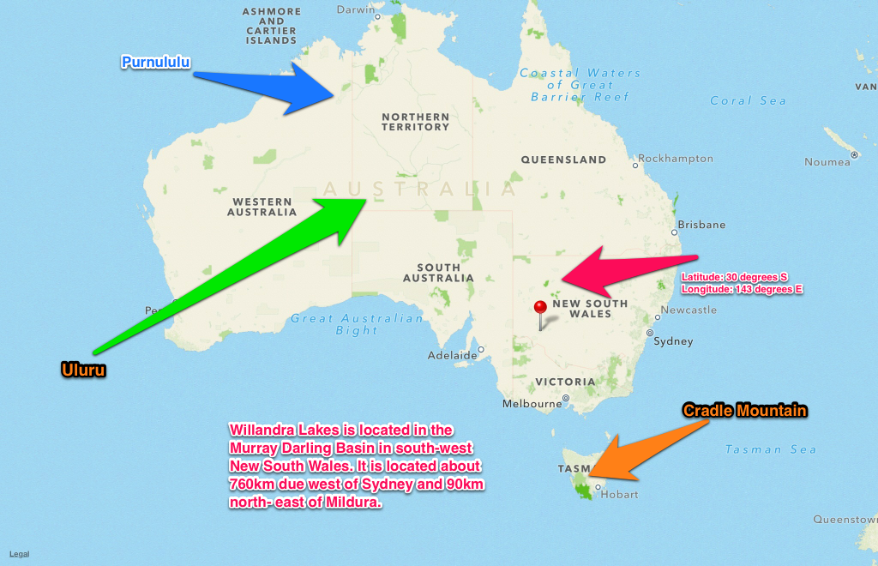
Willandra Lakes was placed on the World
Heritage list in 1981 because:
- It is a geologically unique area of dry
lakebeds rich in fossils.
- It includes the world's oldest cremation
site (26,000 years old) and remains of settlement up to 40,000 years ago
(agricultural use, stone tools).
- It is the most important site in Australia
to observe the period when the giant marsupials became extinct and the human
race became dominant.
Mungo National Park is part of this World
Heritage area and covers about two‐thirds of Lake Mungo and includes the spectacular parts of the Walls
of China lunette.
The remaining area comprises pastoral
leasehold properties. Joulni Station at the southern end of the Mungo lunette
is of cultural significance to the three Traditional Tribal Groups.
There are five large, interconnected, dry
lake basins and 14 smaller basins varying in area from 6 to 350 km2.
Aborigines lived on the shores of the lakes
for at least 50,000 years, and the remains of a 40,000 year old female found in
the dunes of Lake Mungo are believed to be the oldest ritual cremation site in
the world.